
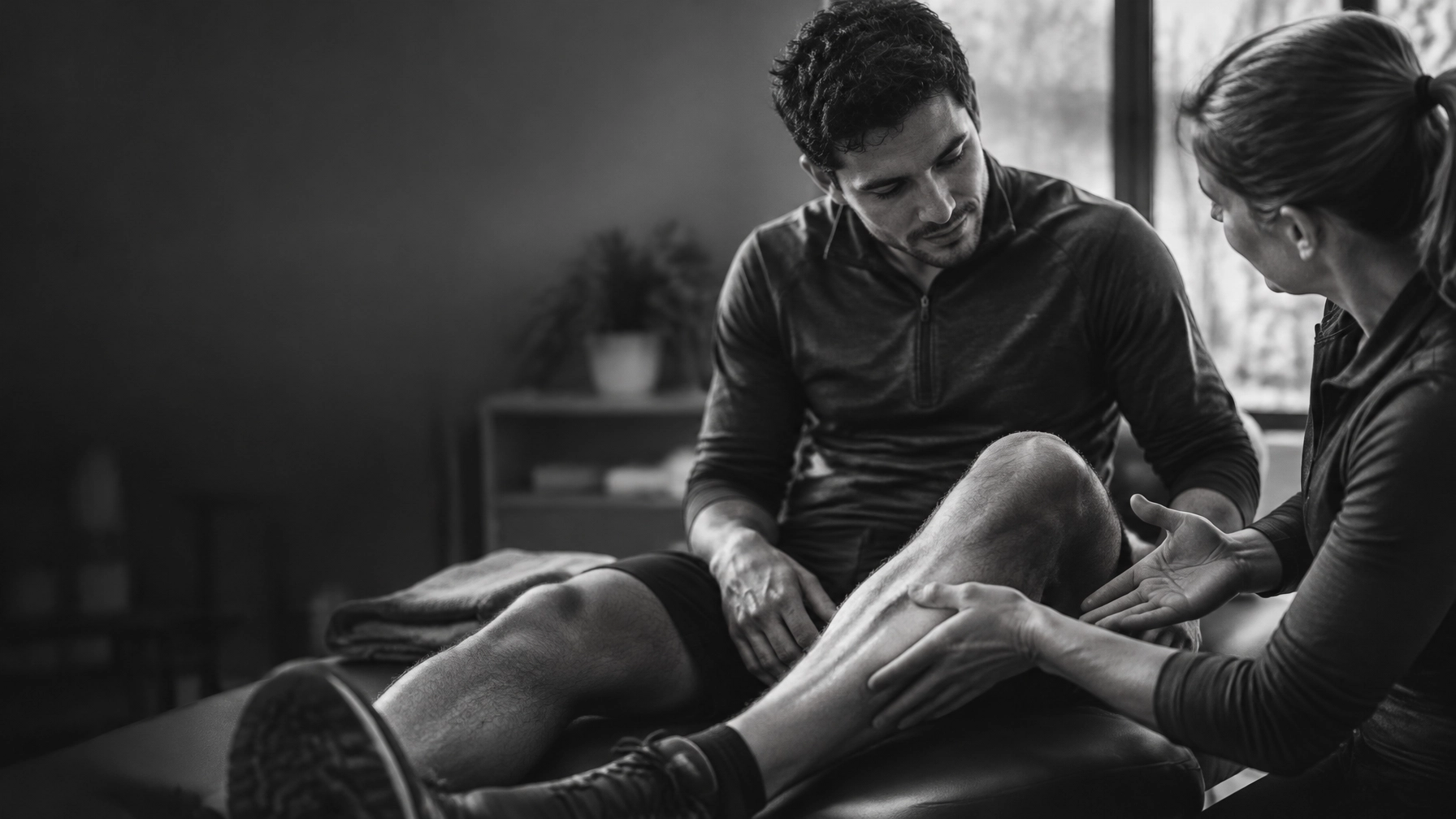
The best massage for recovery is the one that fits your body, training and timing. Deep tissue and sports massage can both support comfort and movement, but they aren’t the same thing, and more pressure isn’t always better.
If you’re training, competing or simply trying to move through your day with less tension, here’s how to understand the difference and choose a session that makes sense for you.
Deep tissue vs sports massage at a glance
| Deep tissue massage | Sports massage | |
|---|---|---|
| What the name describes | A focused approach using slower, sustained pressure | A treatment approach shaped around sport, activity and timing |
| Common goal | Address persistent, localized muscle tightness and tension | Support an athlete’s comfort, mobility and recovery needs |
| Pressure | May be firmer, but should remain tolerable | Varies from light to focused, depending on the goal |
| When it may fit | When you have a stubborn area and time to recover afterward | During training, around an event, or as part of an activity-based care plan |
The labels can overlap. A sports massage may include deeper work, and a deep tissue session may be useful for an active person. The difference is that deep tissue describes the style of pressure, while sports massage describes the purpose and context of care.
What is deep tissue massage?
Deep tissue massage uses slower, more focused techniques to work with areas of muscular tension. A therapist may use sustained pressure, compression or deliberate strokes along soft tissue, adjusting the approach to your feedback and comfort.
It may suit you if:
- A particular area feels persistently tight, such as your shoulders, back or legs.
- You want focused attention: rather than a general, full-body relaxation session.
- You can take it easy afterward, especially if the work is unfamiliar or more intense.
“Deep” doesn’t mean the therapist should push through pain. Pressure should stay within a level you can tolerate. Tell your therapist if you feel sharp, radiating or escalating discomfort, or if you want the pressure changed.
Deep tissue work also shouldn’t be described as “breaking up” tissue or fixing every source of pain. It can be part of a broader plan, but a persistent or concerning problem may need assessment from a healthcare professional.
What is sports massage?
Sports massage is adapted to your activity and what you’re working toward. It isn’t one fixed set of techniques or one pressure level. Depending on your needs, a session may include gliding, compression, kneading, focused work or assisted movement.
A sports-focused session may be a good fit if:
- Your training affects what your body needs. Your therapist can consider the muscle groups and movements you use.
- You’re planning around an event. Timing and pressure can be adjusted to avoid trying unfamiliar, intense work right before competition.
- You want recovery care to fit your routine. The session can reflect your current training phase and comfort.
A pre-event session is not automatically a deep massage. Many athletes prefer lighter, shorter work close to competition, while more focused pressure may be considered at another point in their schedule. If you’re preparing for a fight or tournament, explore Combat Competition Prep in Edmonton.

The key difference: pressure versus purpose
Deep tissue and sports massage aren’t opposing choices. One describes a technique; the other describes a treatment focus.
Deep tissue: focused pressure for localized tension. Your therapist may use slower, more sustained work in selected areas, within your comfort level.
Sports massage: treatment shaped around activity. Your therapist considers your sport, training schedule, goals and the timing of your next event.
Either approach: customized to you. Your symptoms, preferences and health history help guide what is appropriate.
A useful question to ask yourself is: What do I need from this session right now? If the answer is “I want focused work on a tight area,” a deep-tissue approach may be worth discussing. If it’s “I want support that fits my training or competition schedule,” a sports-oriented session may be the better starting point.
Which is better for recovery?
Neither is universally better. The right choice depends on your goal, how your body responds and how soon you need to train or compete.
A 2020 systematic review and meta-analysis of sports massage research found small improvements in flexibility and delayed-onset muscle soreness (DOMS), but no evidence of improvements in strength, jumping, sprinting, endurance or fatigue. The authors also noted that the studies varied, making it difficult to draw firm conclusions about one ideal technique or schedule. You can read the review in BMJ Open Sport & Exercise Medicine.
In practical terms, massage may help some people feel more comfortable or flexible after activity, but it shouldn’t be treated as a guarantee of faster healing or better performance. Think of it as one possible part of recovery, not a replacement for rest, appropriate training, rehabilitation or medical care when needed.
A simple way to choose
- You have a persistent, localized area of muscle tightness, ask whether a focused deep-tissue approach may be appropriate.
- You want care adapted to a sport or training block, describe your activity and schedule so the session can be planned around them.
- You’re close to competition: mention the date before treatment, and avoid experimenting with unfamiliar intense pressure right before an event.
- You’re not sure what to book, start by explaining your goals and asking the clinic which appointment is the best fit.
When does a combined approach make sense?
Sometimes the most useful session isn’t an either-or choice. Your therapist may use a sports-focused plan that includes brief, deeper work on a particular area, or keep the pressure lighter while focusing on movement and comfort.
The combination should have a reason. For example, a recreational runner in Edmonton might want to discuss tight calves after training, while also considering how a longer run later in the week affects treatment timing. A strength athlete might ask for focused shoulder work but prefer gentler pressure before a competition.
A combined approach: flexible care for changing needs. Your goals can shift between training, recovery and competition, so the plan should be based on what’s happening now, not a preset routine.
At Golden Palm Massage and Wellness, appointments are tailored to your goals, pressure preferences and relevant health history. Learn more about massage therapy in Edmonton or explore manual osteopathic therapy if you’d also like to ask about joint mobility and movement-related concerns.

Safety and timing matter
Some post-session tenderness can happen, especially after unfamiliar or firmer work. More pressure is not proof that a treatment is more effective, and a session should not leave you feeling that you had to endure pain to get a result.
Share your health information: it helps guide the session. Tell your therapist about injuries, recent surgery, medications, medical conditions and any symptoms that concern you. Ask questions and give feedback during treatment; you can request a change or pause at any time.
Massage is not appropriate for every symptom or situation. If you have a new injury, significant swelling, severe or unexplained pain, or a major loss of function, seek advice from a healthcare professional before booking. New one-sided leg swelling, warmth or redness with calf pain can require urgent medical assessment, don’t massage the area.
For general information about massage benefits and safety, see the National Center for Complementary and Integrative Health.
Choose a session that meets you where you are
For a specific tight area: ask about focused work. Your therapist can discuss whether a deep-tissue approach fits your needs and comfort.
For an active schedule: explain your sport and timing. A sports-oriented session can be planned with your training or competition in mind.
For uncertainty: start with a conversation. You don’t need to diagnose yourself or arrive knowing the perfect technique.
Golden Palm offers customized 60- and 90-minute sessions in West Edmonton. If you’re unsure which service to choose, contact the clinic before booking, or book your massage therapy appointment online. Your recovery plan should feel personal, practical and responsive to your body.
Leave a Reply