
A tender spot in your shoulder or back can make everyday movement feel harder than it should. Understanding what people mean by a “muscle knot” can help you choose a sensible next step: one based on your symptoms, comfort and routine, not a one-size-fits-all fix.
If you’re looking into muscle knot treatment, massage may be one option to explore. It may help some people feel more comfortable in the short term, but it cannot guarantee lasting relief or tell us exactly what is causing every sore spot. A thoughtful plan also considers movement, workload and when to seek medical advice.
What does a muscle knot feel like?
“Muscle knot” is a common, everyday phrase, not a diagnosis. People often use it to describe an area that feels tight, tender or unusually sensitive. You might notice a dull ache, stiffness, soreness when pressing the area or discomfort when moving in a particular way.
Sometimes a tender point can be felt beneath the skin. In clinical discussions, some similar symptoms are described as myofascial trigger points. However, there is no simple test that confirms a muscle knot by touch alone. A sore or firm area can have different explanations, so it’s best not to assume you know what is happening just by how it feels.
Knots are often noticed in the neck, shoulders and back. They may feel more obvious after a long period in one position, repetitive work or a demanding workout. Some people also notice that a tender spot seems to reproduce discomfort nearby. Everyone’s experience is different.

Why might you get a knot?
There is not always one clear cause. Muscle tightness or tenderness may show up alongside things like:
- Repeated or unfamiliar activity: a sudden increase in training, lifting or other physical work can leave an area feeling sore.
- Long periods in one position: desk work, driving or other sustained postures may contribute to stiffness or discomfort.
- Limited recovery: changing activity, rest and movement habits may be worth considering when soreness keeps returning.
- Stress and tension: you may notice yourself holding tension in your shoulders or jaw during stressful periods.
- An injury or other health concern: ongoing or unexplained pain should not automatically be labelled a knot.
These are possible contributors, not proof of what is causing your symptoms. And a knot does not necessarily mean a muscle is physically tied up or that a therapist needs to force it loose.
If you’re curious about how massage therapists think about connective tissue, our article on fascia and massage explores that topic separately. Here, the focus is practical: what you feel, what may affect it, and how to consider next steps.
What can you try at home?
Start gently. A helpful first step may be to notice which positions or activities seem to affect the area, then adjust your routine where possible. Try comfortable movement and regular position changes rather than staying still for long periods. If a particular activity repeatedly aggravates your symptoms, consider reducing or modifying it temporarily.
You can also try comfortable warmth, gentle range-of-motion movements or light self-massage if these feel good. Keep pressure manageable: pressing harder is not necessarily more helpful. Stop if you feel sharp pain, numbness, bruising or a lingering increase in discomfort.

A ball against the wall can let you control the pressure more easily than leaning on a hard surface. Keep the sensation tolerable and avoid pressing directly on the spine, a bony area or a spot that feels unusually painful. If you’re unsure whether self-massage is suitable for you, ask a health professional.
When discomfort is recurring or interfering with daily activities, an appropriate health professional can help assess what might be contributing and discuss options. Massage may be part of that conversation, but it is not a substitute for diagnosis or medical care.
What may muscle knot treatment involve?
A useful session starts with a conversation. Your therapist may ask where you feel discomfort, when it began, what seems to affect it and what you would like to do more comfortably. They may also ask about your health history, pressure preferences and any areas you would like them to avoid.
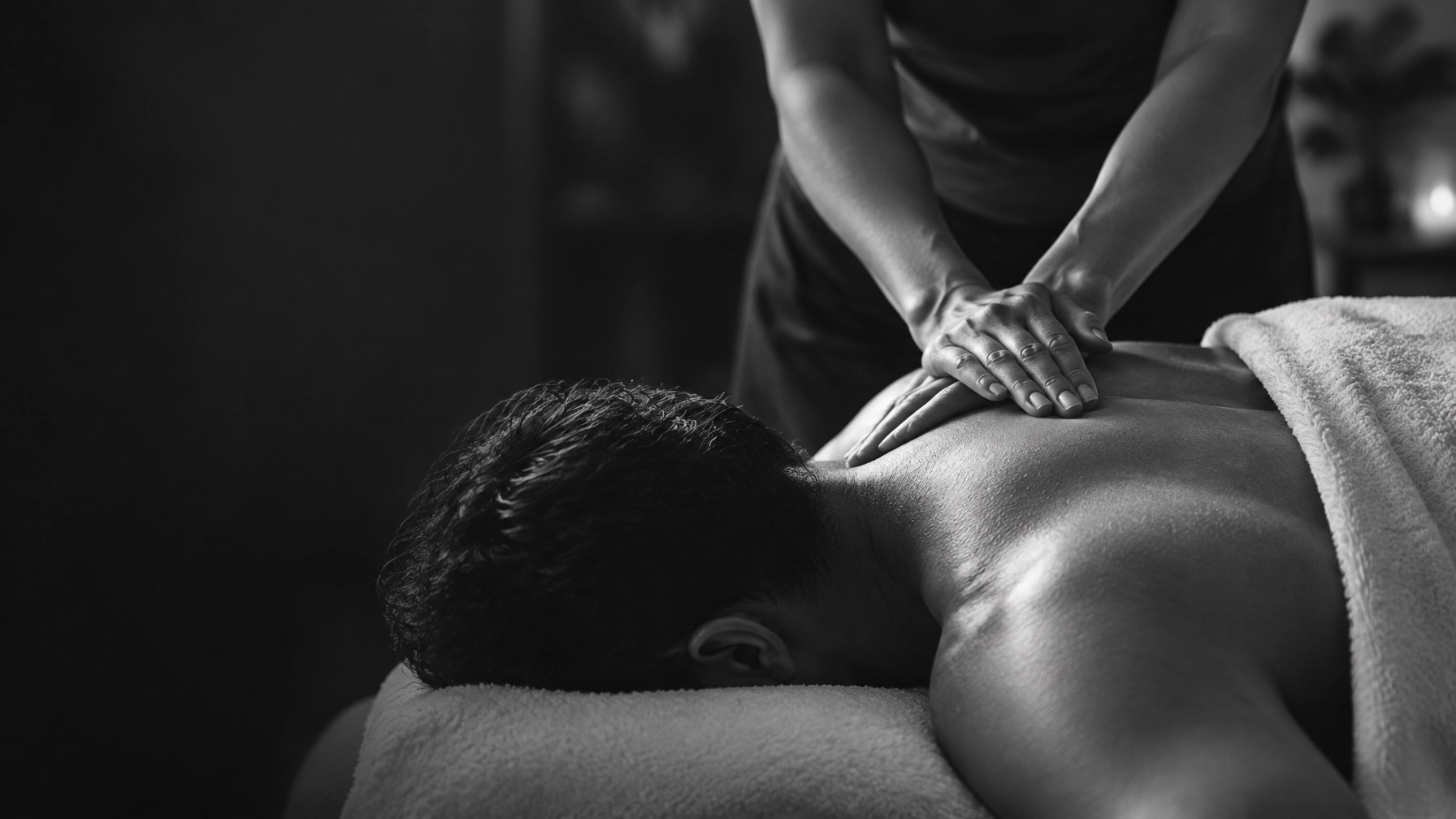
Treatment should be based on your goals and comfort, not on finding one tender point and pressing as hard as possible. Depending on your needs and the therapist’s assessment, a massage may include measured pressure, compression, kneading or other hands-on techniques. You can ask for lighter pressure, a change in approach or a pause at any time.
At Golden Palm Massage and Wellness in Edmonton, massage sessions are tailored to your needs. You can discuss your concerns and preferences with your therapist before and during your appointment.
What massage may help with
Massage may help some people feel less tense, more relaxed or more comfortable moving for a period of time. The experience and duration of any benefit vary. Research on myofascial trigger points and hands-on treatment uses different definitions and techniques, so results should not be treated as a promise for every person.
What massage may not do
Massage cannot reliably confirm the cause of a tender spot by touch alone. It also cannot guarantee that discomfort will go away permanently, prevent every recurrence or “break up” a knot as if it were a physical object. If habits, workload or another health concern are contributing, hands-on care alone may not address the whole picture.
A realistic goal is to explore whether massage is comfortable and useful for you, while considering other steps that may support your day-to-day function. For more on how a session may fit into back-pain care, read our article on back pain in Edmonton and preparing for a massage appointment.

When should you seek medical advice?
A sore area may be muscle-related, but massage is not the right first step for every symptom. Consider getting medical advice if pain is severe, worsening, unexplained, keeps returning or significantly limits your movement or daily activities.
Seek prompt medical assessment for new symptoms such as weakness or numbness, a major injury, fever, significant swelling, or a lump that is growing or changing. If you are unsure whether massage is appropriate, speak with a health professional and share relevant information with your therapist before treatment.
A practical approach to muscle knots
You do not have to guess at a single “right” fix. Begin with what you notice, make manageable changes to activities or positions that seem to aggravate the area, and choose care that feels appropriate for your needs. Massage may be one part of that approach, with realistic expectations and open communication.
Golden Palm Massage and Wellness is located at 17615 105 Ave NW, Suite 200, Edmonton. You can book online through Jane App any time. Direct billing is available to 35+ insurers; coverage eligibility depends on your individual plan, service and practitioner.
Ready to talk through your goals? Book a massage appointment through Jane App.
Leave a Reply